What is biometric authentication? Biometric Authentication Advanced Security Measures For Financial Transactions are used to identify people based on their unique physical characteristics. So instead of something like a password or a pin number, biometrics use things like your fingerprint, your face or even your voice. Biometric authentication is quickly becoming one of the most common ways that we verify our identity online. It’s quick, convenient and usually very secure. Biometrics can be used for things like unlocking your phone or making purchases in stores. But they’re especially useful for financial transactions.
There are many different types of biometric authentication but they generally fall into two categories, behavioral biometrics and physiological biometrics. Physiological biometrics are based on the measurement of a person’s physical traits. Examples include fingerprints, facial recognition, iris scanning and voice recognition. Behavioral biometrics on the other hand are based on the measurement of a person’s behavior. This includes things like the way that you type on a keyboard or how you hold your mouse. While behavioral biometrics can be helpful, they tend to be less reliable than physiological biometrics so we won’t be focusing on them today.
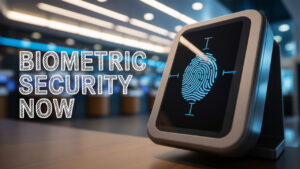
So let’s take a closer look at some of the most common physiological biometric authentication methods. Fingerprint recognition is probably the most widely used biometric authentication method. It works by scanning a person’s fingerprint and then comparing it to a stored fingerprint. This can be done using a fingerprint sensor which is typically what’s used on phones and tablets or a fingerprint scanner which is more commonly used for things like logging into computers or accessing secure facilities. Fingerprint recognition is relatively fast and accurate making it a popular choice for financial transactions. In fact, many banks now offer fingerprint login as an option for their mobile apps.
Another common biometric authentication method is facial recognition. As the name suggests, this method uses a person’s face to authenticate their identity. Facial recognition works by scanning the unique features of a person’s face such as the distance between their eyes or the shape of their nose. This can be done using a camera and an algorithm. Facial recognition is becoming increasingly popular as it’s a convenient and contactless way to authenticate. It’s often used for things like unlocking your phone or logging into a computer. It’s also being used more and more for financial transactions. For example, some banks allow customers to use facial recognition to log into their mobile banking apps.
Another biometric authentication method is iris scanning. Iris scanning works by capturing an image of a person’s iris and then analyzing the unique pattern of colors and textures. Iris scanning is highly accurate and is often used for things like border control and law enforcement. However, it’s not as common for financial transactions due to the cost and complexity of the technology.
Finally, let’s take a look at voice recognition. Voice recognition works by analyzing the unique characteristics of a person’s voice. This can be done using a microphone and a speech recognition engine. Voice recognition is often used for things like call centers and voice assistants. However, it’s not as common for financial transactions as fingerprint recognition or facial recognition. This is because voice recognition can be fooled by things like recordings or even a really good imitation.
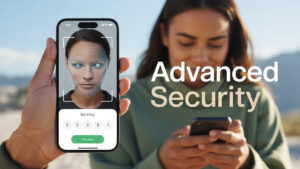
Now that we’ve covered the basics of biometric authentication, let’s take a deeper dive into how it’s used for financial transactions. Biometric authentication is becoming increasingly popular for financial transactions due to its convenience and security. Traditional methods of authentication such as passwords and pin numbers can be easily compromised but biometrics make it much more difficult for fraudsters to access your accounts. Biometric authentication can help keep your financial information safe from fraudsters in a few key ways. First, biometrics are unique to each individual. This means that it’s extremely unlikely that someone could imitate your fingerprint or your facial features. Second, biometrics are difficult to forge. Even if a fraudster manages to obtain a copy of your fingerprint or a photo of your face, they would still need to find a way to accurately recreate these in real time, which is extremely difficult. Third, biometrics are impossible to share. Unlike a password or a pin number, you cannot give away your fingerprint or your face. This means that even if a fraudster tricks you into sharing your biometric data, they will still only have a copy of it, not the actual thing.
Despite the many benefits of biometric authentication, it’s important to be aware of the potential drawbacks. One concern is that biometric data could be stolen and used for fraudulent purposes. For example, a hacker could break into a database and steal a customer’s fingerprint. However, this is unlikely to happen with strong security measures in place. Another concern is that biometric data could be used to track and identify individuals without their consent. This is a valid concern, but it’s important to remember that this can also happen with traditional methods of authentication. For example, a fraudster could steal a password and use it to log into a bank account without the customer’s consent. Ultimately, the decision of whether or not to use biometric authentication is a personal one. However, the benefits of convenience and security make it a compelling option for financial transactions.
Now that we’ve discussed the benefits and drawbacks of biometric authentication, let’s take a look at some examples of how it’s being used in the financial industry. One example is the use of fingerprint recognition for mobile banking. Many banks now offer fingerprint login as an option for their mobile banking apps. This allows customers to access their accounts and make transactions with just a tap of their finger. Another example is the use of facial recognition for ATM transactions. Some ATM’s now use facial recognition to verify the identity of the person withdrawing cash. This helps to prevent fraud and makes it more convenient for customers. Additionally, the use of biometrics in ATMs can also help to prevent identity theft. By using a combination of biometrics and other security measures, banks can help ensure that only authorized individuals can access their accounts. This can help to prevent unauthorized withdrawals or transfers of funds.
Another example of biometric authentication in the financial industry is the use of fingerprint scanning for credit card payments. Some merchants now accept fingerprint scanning as a form of payment authorization. This can help to reduce fraud and make transactions more secure. Furthermore, the use of biometrics in credit card payments can also help to prevent identity theft. By using a combination of biometrics and other security measures, merchants can help ensure that the person making the payment is the authorized cardholder. This can help to prevent unauthorized charges and protect sensitive card information.
Finally, the use of voice recognition for banking transactions is becoming increasingly popular. Customers can use voice recognition to make transactions over the phone or through voice assistants such as Siri or Alexa. This can make banking more convenient and accessible, especially for those who may have difficulty using traditional methods of authentication. However, it’s important to note that voice recognition should be used with caution as it can be more susceptible to fraud and spoofing than other biometric methods.
Overall, the use of biometrics in the financial industry is growing rapidly. As the technology becomes more advanced and secure, it’s likely that we’ll see even more applications of biometrics in the future. Biometrics are already being used for a variety of financial transactions from mobile banking to credit card payments. As the technology continues to evolve, we can expect to see even more applications of biometrics in the financial industry.